On March 26, PTC held the China Electronics and Medical Devices Industry Elite Summit in Wuhan, with exchanges around "AI-Empowered Digital Innovation and Transformation of R&D." As an international industrial software enterprise with broad influence in manufacturing software, PTC has long specialized in product lifecycle management, application lifecycle management and engineering digitalization, continuously promoting the deep combination of AI with R&D management systems. As the data and process foundations of large models, agent systems and industrial scenarios continue to mature, AI is accelerating from generic capability toward industrial value deployment, becoming an important driving force of manufacturing R&D digital transformation. Against this backdrop, SOIN AI was invited to attend and, around the theme "AI-Enabled Software Lifecycle Management," launched the ALA Software Lifecycle Management AI Product Solution.
Focusing on Manufacturing R&D Digitalization, Showcasing ALA's Core Capabilities
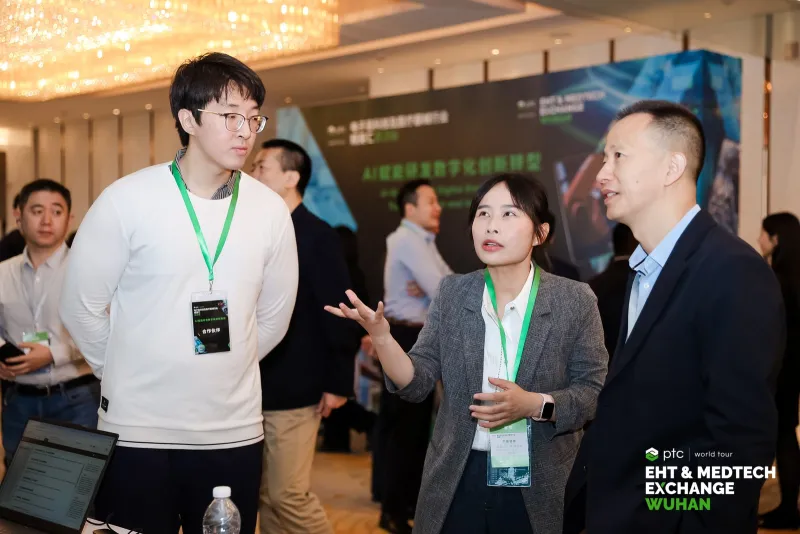
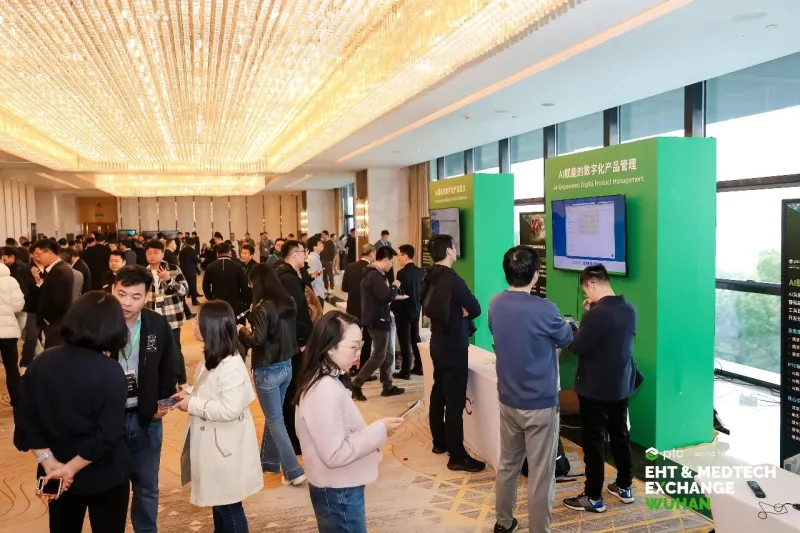
At the event, SOIN AI engineers introduced to attendees ALA's core capabilities and application value in manufacturing R&D management scenarios, demonstrating the deployment path of AI technology in requirements engineering, cross-language collaboration, quality checking and R&D knowledge reuse.
For manufacturing, the value of AI is moving from "demos you can see" toward "truly entering the R&D process." As the software-defined product trend deepens and R&D complexity keeps rising, requirements quality, cross-team collaboration efficiency, the degree of R&D knowledge reuse, and the quality of the connection between requirements and testing increasingly directly affect enterprises' R&D efficiency and engineering management level.
SOIN AI has long focused on advanced manufacturing R&D digitalization scenarios, continuously polishing Agentic AI product capabilities oriented to real enterprise business around complex knowledge processing in industrial R&D processes, requirements governance, and engineering collaboration efficiency. ALA, launched this time, is precisely the productized result of SOIN AI's continued efforts around software lifecycle management scenarios.
Around Requirements Governance and Pre-R&D Stages, ALA Has Released Multiple Core Capabilities
ALA focuses on key business stages in software lifecycle management, targeting requirements-side governance and pre-R&D stage efficiency. Currently, ALA's released core capabilities include:
Requirements document parsing and structured processing: supports identification, extraction and structured processing of complex requirement documents, establishing a standardized basis for subsequent analysis, circulation and reuse.
Requirements item translation and cross-language processing: supports cross-language conversion and semantic alignment of requirement items, serving cross-regional and cross-team R&D collaboration.
Requirements quality checking: targeting the software industry's common quality standards and engineering norms, systematically checks requirement items for completeness, clarity, standardization and verifiability, helping enterprises improve requirements quality and engineering consistency.
Requirements similarity identification and retrieval: supports similar identification of historical requirements, associated retrieval and reuse assistance, improving the utilization efficiency of R&D knowledge assets.
Requirements consistency analysis and conflict detection: supports analysis of consistency between requirement items and between requirements and context, identifying potential conflicts and risk points.
From Single-Point Capabilities to Process Support: AI Truly Enters Software Lifecycle Management
Compared with traditional single-point AI tools, ALA does not stop at "recognizing content" or "answering questions." It emphasizes combination with R&D management processes, providing sustained support for business objects, business rules and business processes, helping enterprises build intelligent capabilities in real R&D scenarios that can be accumulated, reused and integrated into existing systems.
SOIN AI believes that the value of AI in software lifecycle management should not stop at local efficiency improvement, but should further move toward deep support for requirements governance, knowledge reuse, collaborative processes and quality control. Only by truly entering the R&D process and serving engineering management can AI form long-term value in manufacturing scenarios.
Continuously Advancing Product Upgrades, Improving the Requirements-Testing Collaboration Chain
Based on this judgment, SOIN AI is also continuously advancing ALA's product upgrades. In the next stage, ALA will further strengthen capability coverage for requirements-testing collaboration scenarios, focusing on:
Automated test case generation, intelligent requirements collection, intelligent requirements decomposition, and intelligent requirements retrieval.
As these capabilities are progressively completed, ALA will further extend from requirements governance to the requirements-testing collaboration chain, helping enterprises establish more efficient, more reusable and more intelligent ways of working in software lifecycle management.
In the future, SOIN AI will continue to focus on advanced manufacturing R&D digitalization scenarios, continuously polishing product capabilities around software lifecycle management, engineering knowledge processing and process-level AI deployment, promoting AI to truly serve the quality improvement, efficiency gains and continuous upgrading of enterprise R&D systems.