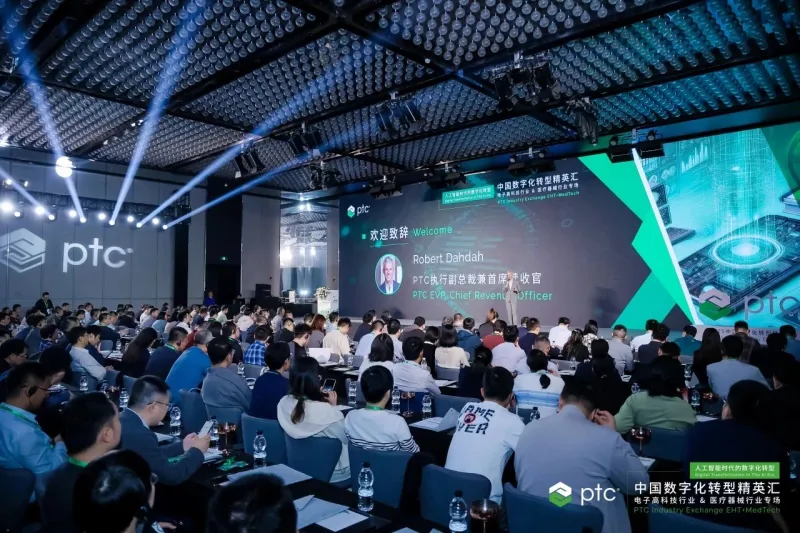
The PTC China Digital Transformation Elite Summit series is a premium, invitation-only conference tailor-made for decision-makers of leading Chinese enterprises. It offers in-depth discussion of how senior executives can leverage cutting-edge digital information technology and process optimization to respond to the profound changes in ways of working and operating models in the digital era, helping enterprises find opportunities amid challenges and crises, transform their business, break through, and gain competitive advantage.
ChatGPT, released at the end of 2022, elevated AI technology to a new level, and AI has become one of the hottest topics across industries. The emergence of DeepSeek has put AI development on a fast track. As the Year of the Snake began, a new wave of AI swept across China, prompting more manufacturing enterprises to reflect on and look ahead with AI.
Against this backdrop, on March 13, 2025, PTC held the "China Digital Transformation Elite Summit — Electronics and Medical Devices Edition" themed "Digital Transformation in the AI Era." More than 240 industry elites and experts gathered in the beautiful coastal city of Xiamen to explore the path of digital transformation for manufacturers in the AI era. Through morning keynotes and a panel forum in the main hall, plus two afternoon breakout sessions on "Electronics" and "Medical Devices," digital transformation leaders shared their experiences and outlooks for the AI era, joining attendees on a thoroughly invigorating "brainstorming" journey.
Mr. Robert Dahdah, Executive Vice President and Chief Revenue Officer of PTC, delivered a welcome address. Mr. Dahdah said PTC is helping customers achieve digital transformation at unprecedented speed and in unprecedented ways, with AI playing a very important role. AI is changing by the day, and these changes will positively and directly affect us; the key is how we apply AI to our workflows and integrate it into our processes to deliver better results. Mr. Dahdah expressed great confidence and optimism about these changes. Finally, he warmly welcomed all attendees and invited Mr. Liu Qiang, PTC Senior Vice President and President of Greater China, to deliver the opening address.
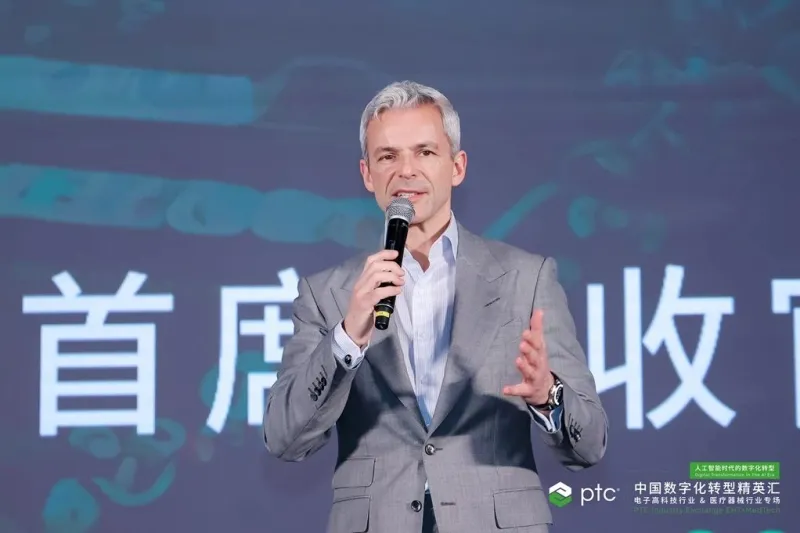
Mr. Robert Dahdah, Executive Vice President and Chief Revenue Officer of PTC
Mr. Liu Qiang, PTC Senior Vice President and President of Greater China, said that under the new AI wave, Chinese manufacturing faces new opportunities and challenges. Especially in the electronics and medical device industries, Chinese manufacturing is continuously breaking through and exploring. How to better use AI technology to achieve the next stage of digital transformation and realize value — especially as GAI technology advances rapidly, and how new quality productive forces can jointly lead the future — has become a common topic for manufacturing digitalization elites. Mr. Liu said he looks forward to exploring the road of digital transformation in the AI era together with all guests through the PTC China Digital Transformation Elite Summit.
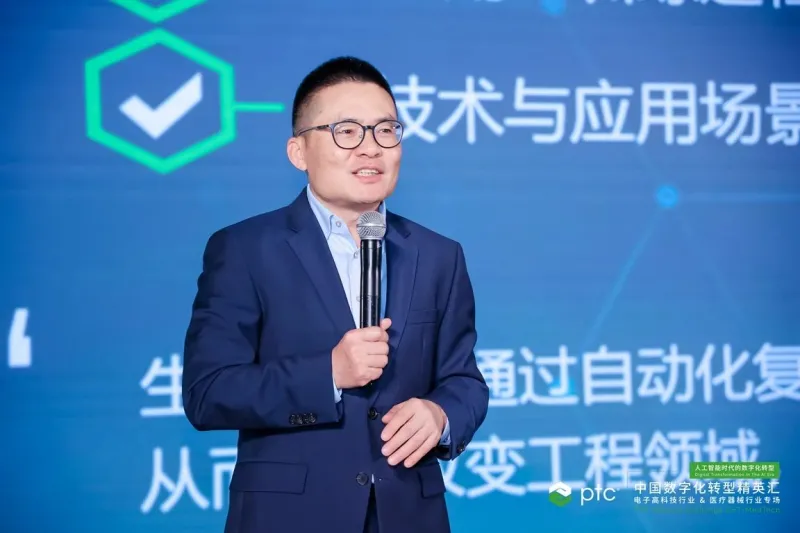
Mr. Liu Qiang, PTC Senior Vice President and President of Greater China
Keynote
AI-Empowered Enterprise PLM
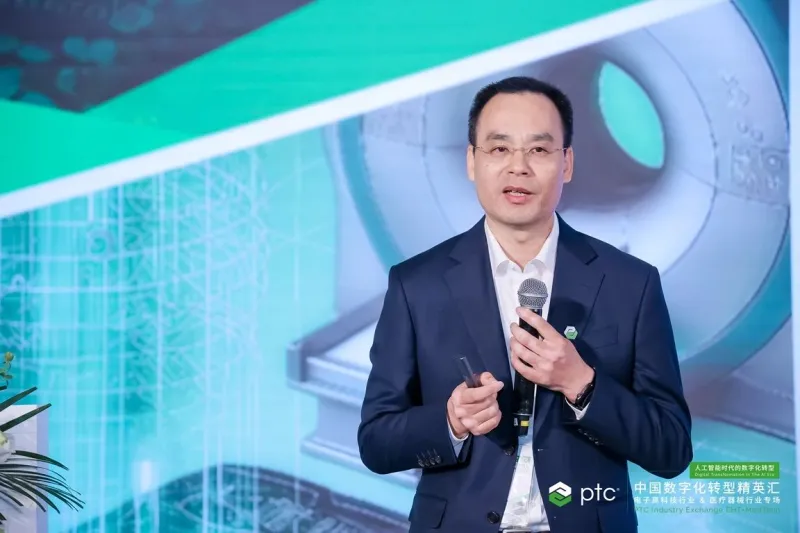
Dr. Shi Zhanbei, Chief Technology Officer of PTC China
The keynotes were moderated by Dr. Shi Zhanbei, CTO of PTC China. Leading industry and product experts, Dr. Shi explained from an industry perspective the direction and thinking of applying GAI in manufacturing; from a product perspective, looked ahead at the continuous integration of PTC products with AI and GAI technologies; and from a technology perspective, explored the deployment path of AI in the high-tech electronics and medical device industries — jointly opening the blueprint of manufacturing digitalization in the AI era.
Keynote
Industry Perspective: Trends and Recommendations for Industrial Software AI Applications
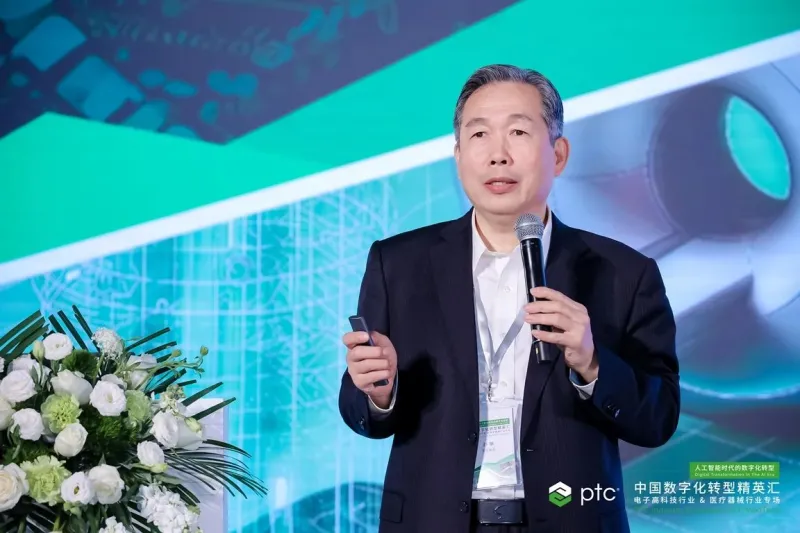
Mr. Zhao Min, President of the Institute for Intelligent Manufacturing and Director of the AI Industry Application Committee of the Innovation Method Society
Mr. Zhao Min, President of the Institute for Intelligent Manufacturing and Director of the AI Industry Application Committee of the Innovation Method Society, said that AI and GAI have triggered a cognitive revolution in industry and have begun to optimize and disrupt industrial sectors and industrial software. High-quality professional data and corpora determine the ceiling of industrial AI large models. In particular, the PLM-centered "digital thread" tools, which carry the digitalization gene, will become the cornerstone of the AI era and determine enterprises' future success or failure.
Keynote
Product Perspective: Product Strategy for AI-Empowered Enterprise PLM
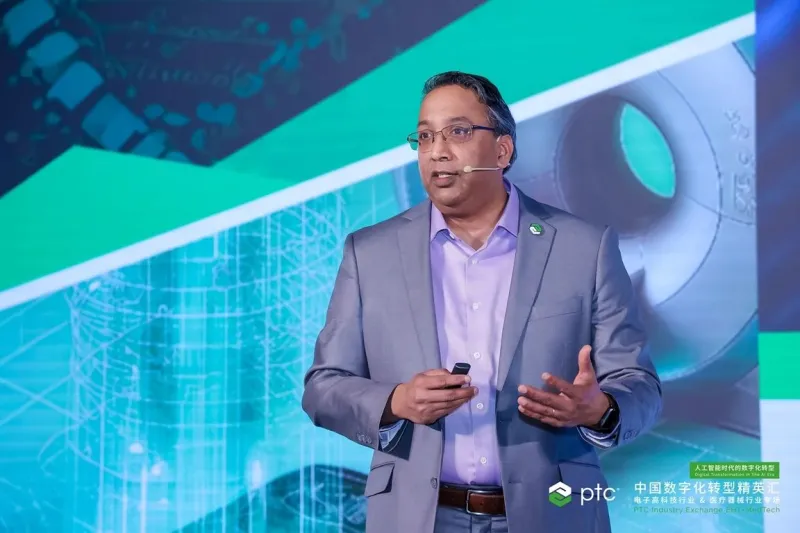
Mr. Mark Lobo, Senior Vice President of PLM Product Management
In the following presentation, Mr. Mark Lobo, Senior Vice President of PLM Product Management, analyzed the key positioning and core value of PLM in digital transformation in the AI era, emphasizing that enterprise PLM remains the foundation of the digital thread, and that AI and GAI will continue to merge with PTC's product strategy. Mr. Lobo shared PTC's future AI-integrated technology architecture, as well as the AI capability roadmaps and progress for CAD/PLM/ALM products — capabilities that will in the future help high-tech manufacturers achieve faster NPI and cost reduction with efficiency gains.
Keynote
Technology Perspective: AI Accelerates Enterprise Digital Transformation
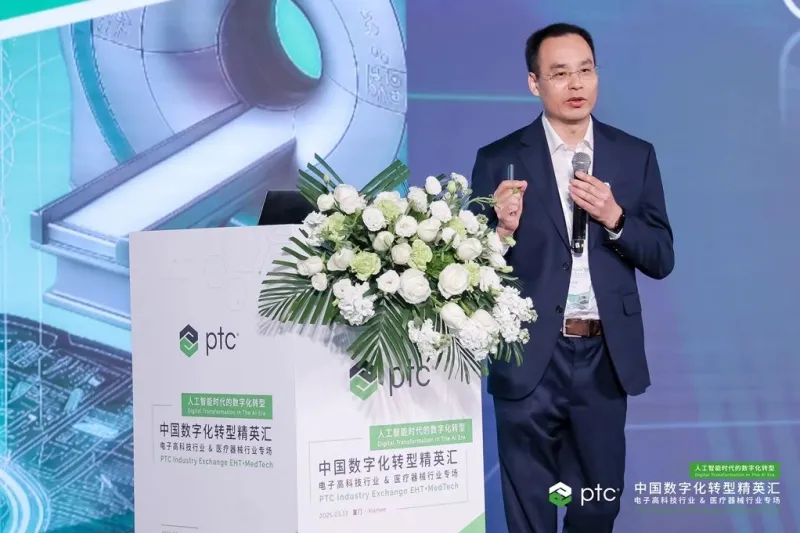
Dr. Shi Zhanbei, Chief Technology Officer of PTC China
Dr. Shi Zhanbei, CTO of PTC China, elaborated in more detail from a technical perspective on the AI deployment path for manufacturers. Dr. Shi first noted that vertical models are the necessary evolutionary path from general large models into industrial domains, and that data is the biggest challenge. Therefore, in today's digital transformation, industry-chain-level digitalization across departments and enterprises has become the new paradigm for restructuring manufacturing. A product-centered digital foundation must be built on the digitalization 2.0 architecture represented by enterprise PLM, achieving end-to-end digitalization and intelligence across the full chain. Using the integrated supply chain as an example, Dr. Shi showed the value scenarios enterprises should cover, the AI capabilities they should have, and the challenges they face in the era of digital intelligence. Finally, Dr. Shi said that AI is both an accelerator of transformation and a strategic element reshaping enterprise competitiveness.
Panel Forum
Exploring Digital R&D and Manufacturing in the AI Era
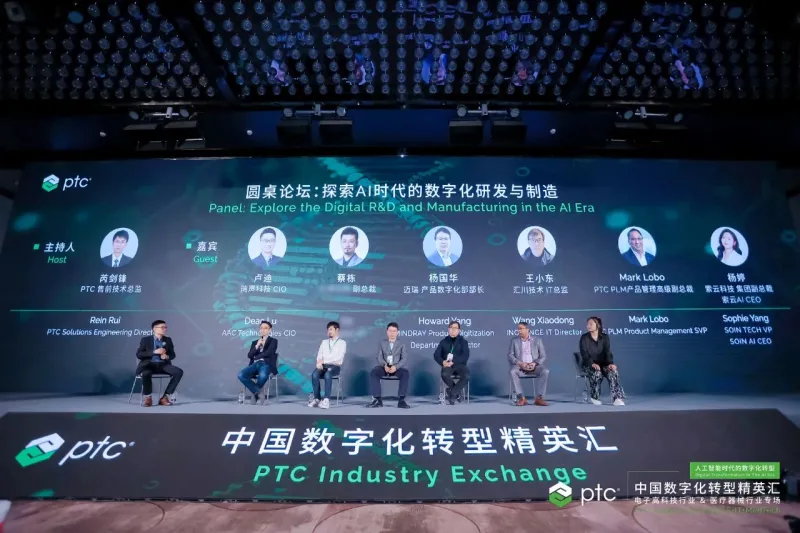
Panel forum
The keynotes looked ahead at the future application blueprint of AI and GAI in manufacturing digitalization, and how to deploy it became the topic of greatest concern to attendees. In the subsequent panel forum, Mr. Rui Jianfeng, Technical Director of PTC China, invited Mr. Lu Di, CIO of AAC Technologies; Mr. Cai Dong, Vice President of a leading electronics company; Mr. Yang Guohua, Director of Product Digitalization at Mindray; Mr. Wang Xiaodong, IT Director of Inovance; Mr. Mark Lobo, Senior Vice President of PLM Product Management at PTC; and Ms. Ting Yang, Vice President of Sointech Group and CEO of SOIN AI, to jointly discuss how AI and GAI can help manufacturers implement digital R&D and manufacturing.
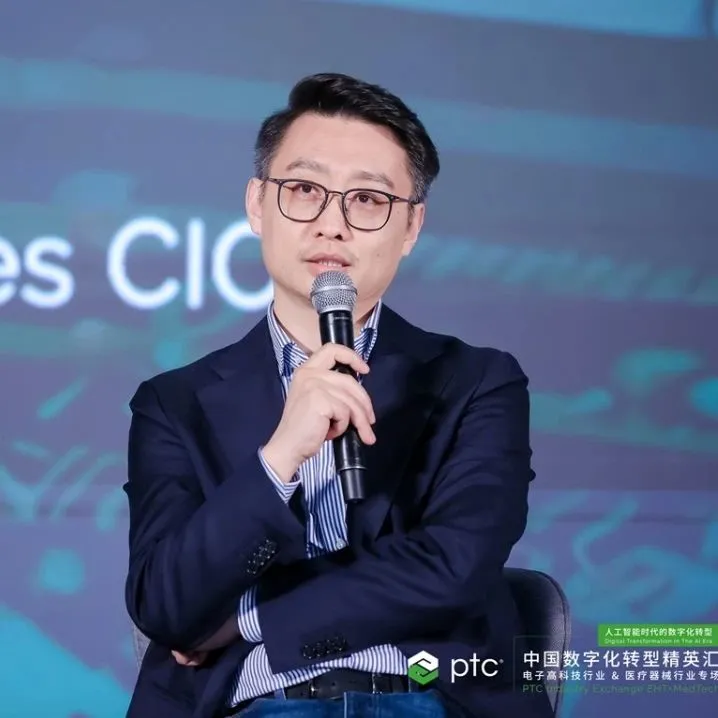
Mr. Lu Di, CIO of AAC Technologies
Mr. Lu Di shared AAC Technologies' exploration experience in AI in recent years. In R&D, rapidly responding to customer needs and converting them into R&D data is the most obvious value AI can bring; in manufacturing, AAC has accumulated massive production data over the years and has tried using AI to optimize manufacturing operations; in general-purpose areas, building intelligent assistants based on knowledge bases and GAI will greatly improve employee efficiency.
Mr. Lu also emphasized the important value of enterprise PLM for connecting R&D to manufacturing. In the past, the conversion and transfer from R&D to manufacturing required extensive manual participation and data processing; how PLM can achieve higher automation and intelligence in this process is a key focus going forward.
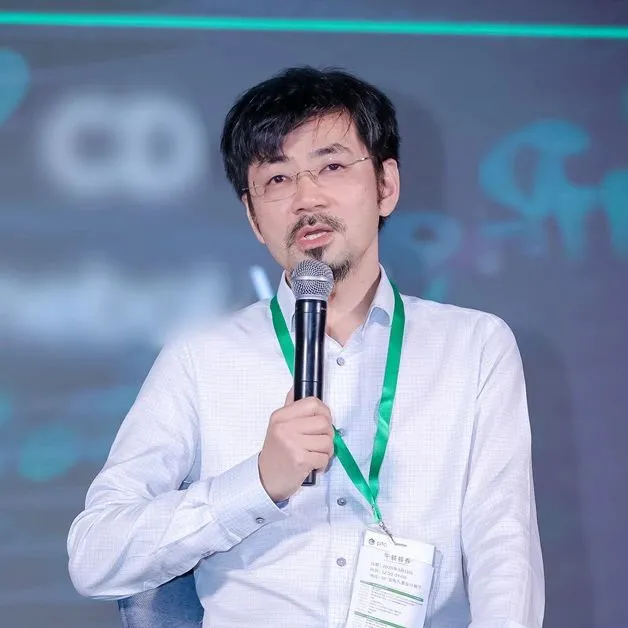
Mr. Cai Dong, Vice President of a Leading Electronics Company
Mr. Cai Dong said that product digitalization is a key development direction for future R&D. In particular, configurable product modularization — spanning the entire lifecycle from planning, R&D and production to launch and retirement — will bring great value to enterprises. In this process, AI can help enterprises collect and analyze R&D, after-sales and market data to improve product configuration portfolios. In other business areas, enterprises are also actively exploring AI, attempting to build internal knowledge bases in sales, after-sales and R&D to improve overall operational efficiency.
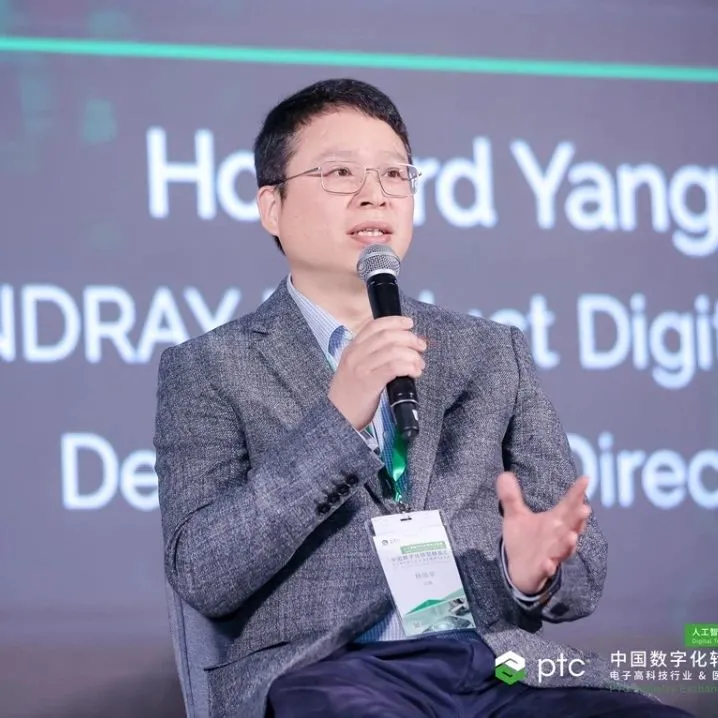
Mr. Yang Guohua, Director of Product Digitalization at Mindray
Mr. Yang Guohua shared Mindray's future plans for enterprise PLM and AI. First is end-to-end data connectivity and traceability across the full process from R&D to manufacturing, service and quality compliance — a process requiring the collaboration of many systems and tools, in which AI will play an important role in analyzing data authenticity and compliance. Second is completeness and compliance from requirements to validation: Mindray has begun exploring the integration of requirements management with PLM to ensure complete connectivity of requirements, design, and test validation, meeting the compliance requirements of countries and regions worldwide. Third is the collaboration and closed loop between R&D and production — ensuring the right data is released to production while using AI to continuously improve product quality and production efficiency, realizing a closed loop of intelligent manufacturing.
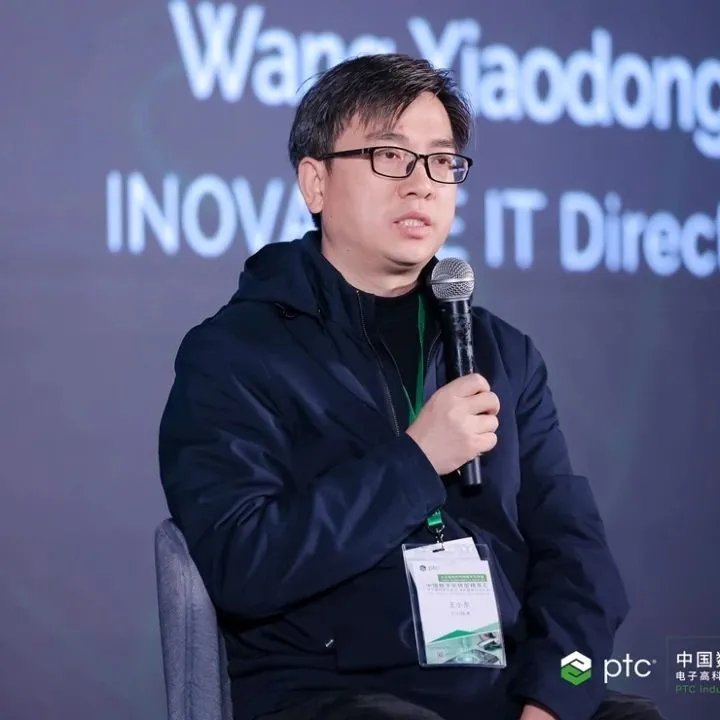
Mr. Wang Xiaodong, IT Director of Inovance
Mr. Wang Xiaodong shared Inovance's AI practices over the past few years, noting that AI has brought clear changes and value to both external and internal business. In customer service, intelligent AI customer service with knowledge bases helps customers resolve product issues faster; in internal operations, intelligent meeting minutes free up participants' labor, and AI-assisted contract review has reduced what used to take hours down to minutes. Inovance is also experimenting with AI for R&D data quality analysis to improve data value and empower business improvement, while AI automatic drawing generation helps R&D personnel improve work efficiency. Mr. Wang thanked PTC for its contributions over the past decade to Inovance's R&D digitalization, and looks forward to jointly deepening the application of enterprise PLM and GAI technologies in service, manufacturing and sales.
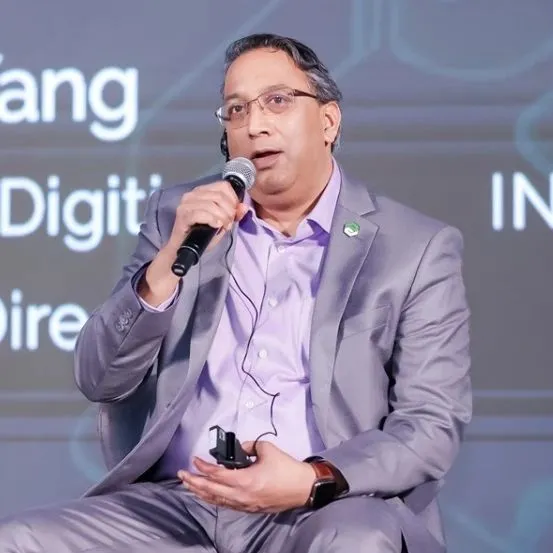
Mr. Mark Lobo, Senior Vice President of PLM Product Management
Mr. Mark Lobo said that PTC views AI as a powerful force for dramatically improving productivity, and PTC will embrace the arrival of the AI era with a more open posture. First, PTC will focus on listening to the market about high-value AI application scenarios, considering how to combine its own solutions within end-to-end digital thread processes to help customers deploy. Second, PTC will adopt a proactive and effective AI strategy, providing an open AI architecture to help more systems integrate with PTC products — where the API gateway for AI applications is very important, helping customers more easily connect their own data models and large language models. PTC recognizes that AI is developing rapidly and PTC cannot complete all value scenarios alone; it will work with customers and ecosystem partners in a more open manner.
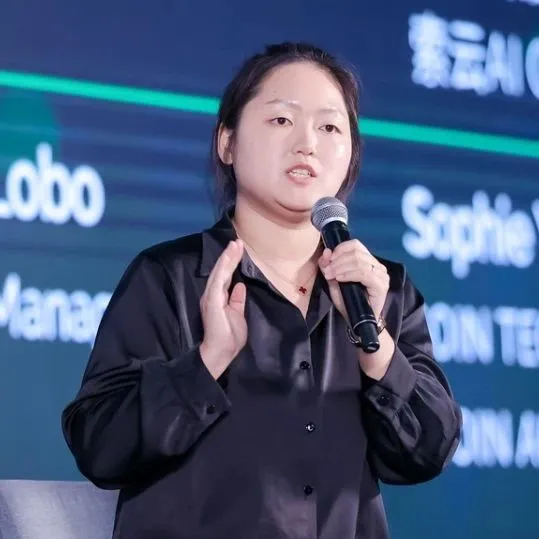
Ms. Ting Yang, Vice President of Sointech Group and CEO of SOIN AI
From a technical perspective, Ms. Ting Yang shared her views on AI deployment in manufacturing. First, she emphasized that AI technology selection must start from business pain points and derive technology choices in reverse; in the overall technology chain selection process, she prefers integration with fundamental business, especially in manufacturing application scenarios. Second, most enterprises' AI applications have not met expectations, mainly because AI technology — especially large language model technology — has just started; many enterprises have not yet built vertical models matching their own business characteristics. It requires continuous accumulation and integration of effective enterprise data, training and distilling usable vertical models, and iterating and optimizing along the way, developing agents that can be autonomously orchestrated and applied — only then can real cost reduction and efficiency gains be achieved.
Finally, Ms. Yang shared recommendations for building the overall AI technology architecture, planning the enterprise AI architecture in layers — infrastructure layer, AI large language model layer, vertical model layer, and agent layer — with case studies. She said AI development in manufacturing must be down-to-earth and progressively improved; it will be a continuously deploying process.
Electronics Industry Breakout Session
Third-Party Perspective: From "AI Replacing People" to "AI for People"
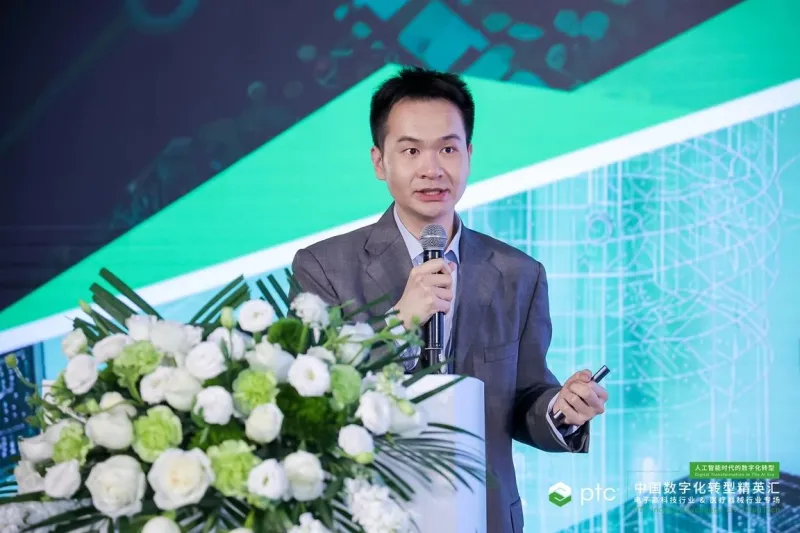
Mr. Chen Bowen, Principal Researcher of the High-Tech Team at Roland Berger
Mr. Chen Bowen, Principal Researcher of the High-Tech Team at Roland Berger, presented "From 'AI Replacing People' to 'AI for People'," sharing trends of generative AI applications in technology enterprise R&D. AI iterates in cycles, and the current boom centers on building generative AI's cognitive capabilities. AI and humans are not simple replacements; rather, they cooperate and improve efficiency in different scenarios.
The R&D systems of technology companies will face three types of challenges going forward: shorter cycles, broader quality coverage and higher input-output ratios. Generative AI can significantly improve R&D efficiency, control costs and improve product quality, with applications trending toward more complex tasks and more proactive involvement, such as AI-assisted chip design. The explorations of many high-tech enterprises show that AI integration will permanently change products and processes; enterprises must proactively adapt to this trend.
Customer Case Sharing
How MBD Empowers R&D and Intelligent Manufacturing in the AI Era
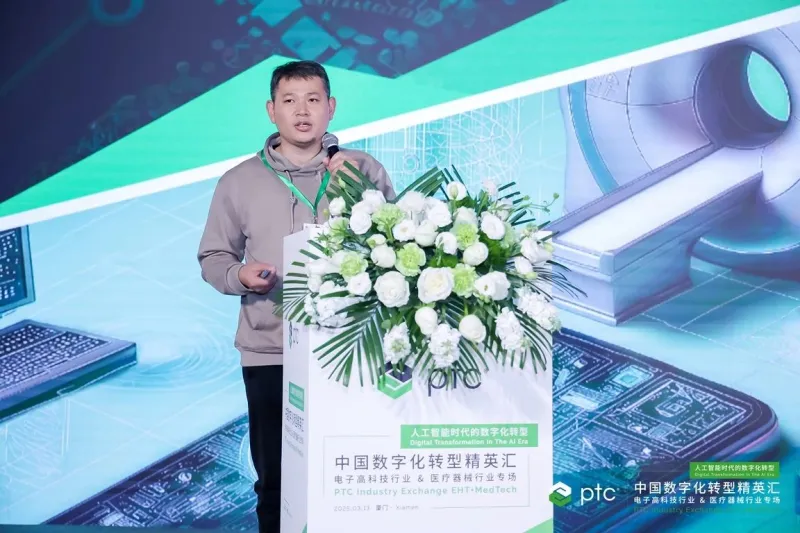
Mr. Wang Bo, Manager of Data and System Solutions at LCFC
Mr. Wang Bo, Manager of Data and System Solutions at LCFC, shared "How MBD Empowers R&D and Intelligent Manufacturing in the AI Era." The core of MBD is using the product's 3D model as the information carrier for downstream production, through which enterprise teams convey information and express product definition with integrated digital models, achieving high collaboration across multiple stages.
The MBD-based R&D model has clear advantages: starting from the digital model, engineering documentation is automatically converted by systems, and model and document lifecycles are synchronized, enabling rapid replication of optimal solutions and strengthening collaboration. MBx built on MBD can achieve design-manufacturing collaboration and the transformation to intelligent equipment — for example, MBV makes everything digital and online, while MBM improves assembly and inspection efficiency.
Mature MBD applications combined with AI technology are expected to reshape the R&D model. AI-driven MBD enables a seamless loop of design and optimization, accelerates complex designs and automatic layout, helps solve cross-disciplinary problems, can automatically generate code and simplify development processes, meets industry standards, and improves overall efficiency.
Customer Case Sharing
The Alibaba Cloud Server PLM Project
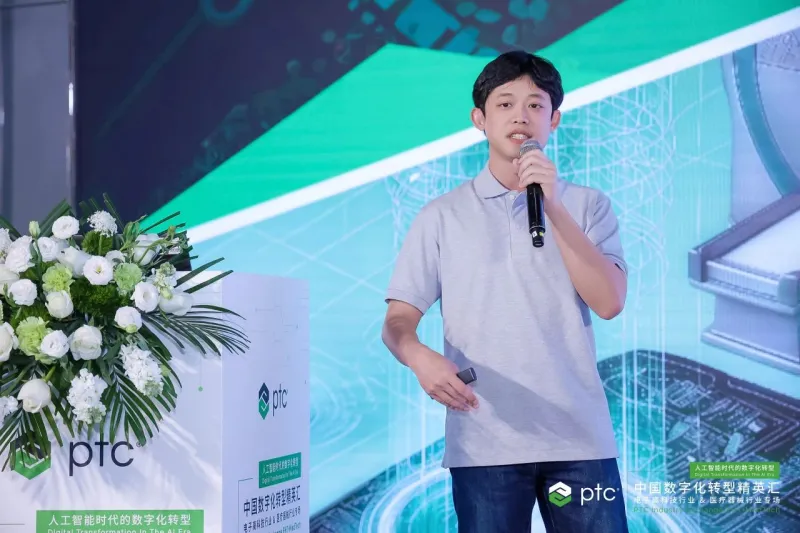
Mr. Da Ming, Alibaba Cloud Server Team
Mr. Da Ming of Alibaba Cloud Server shared a case of PLM application in the server industry. In 2015, Alibaba Cloud began its self-developed server model; today 90% of its servers are self-developed, with the R&D process empowered by PLM. The PLM project set goals of high integrity, high coverage and high flexibility.
High integrity: completely recording product information, establishing category data, and completing the construction of modular lifecycle processes. High coverage: standardizing processes and data, covering different server hardware series, and achieving platform-based, modular product construction. High flexibility: supporting flexible and compliant server combinations according to business needs.
The PLM project delivered considerable value, achieving enterprise-level R&D collaboration, product modularization and configuration management, and rapid selection and configuration, forming multi-domain process closed loops, strengthening change control, and ensuring data quality and the R&D-production closed loop. The successful implementation significantly improved R&D efficiency and data accuracy, shortened R&D cycles, and drove the optimization and transformation of business processes and models.
Special Presentation
Creo Intelligent Innovative Design
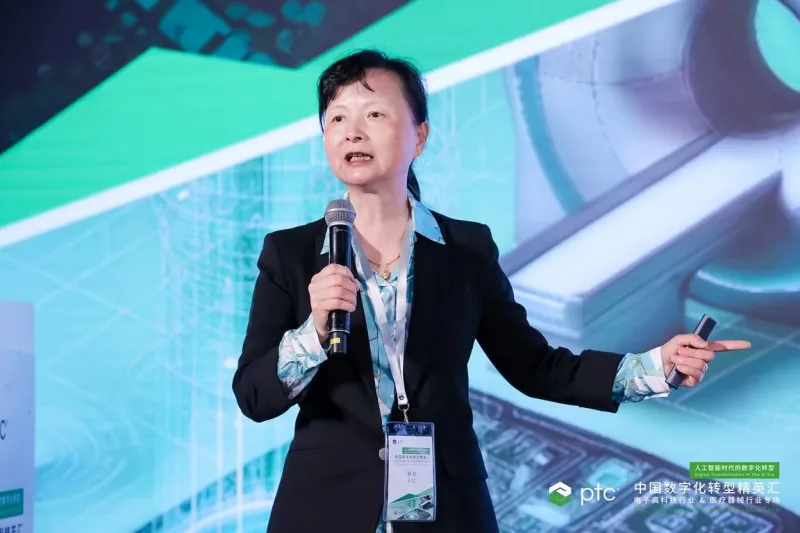
Ms. Zou Hong, Director of CAD Business Expansion at PTC
Ms. Zou Hong, Director of CAD Business Expansion at PTC, shared the capabilities and practices of Creo intelligent innovative design. Creo is a powerful and easy-to-use CAD solution with design, simulation and manufacturing capabilities, enabling customers to leverage their 3D models throughout the product lifecycle. Creo's capabilities are continuously strengthening — for example, box-selection operations and complex model drafting; hole simplified representations and improved performance for large-assembly drawing output.
Creo's new capabilities are widely applied in high-tech, medical and other industries. Telecom cabinets and enclosures combine skeletons and modules to generate models by parameters; medical devices rely on multibody design for intelligent design of peripheral structures with automatic assembly computation, improving efficiency and standardization; in the notebook field, it enables rapid layout and improves efficiency in compact-structure scenarios. In addition, for sheet metal parts, electrical cabling, MCAD-ECAD integration, simulation and more, Creo provides strong support for designers to efficiently complete product design.
Special Presentation
Enterprise PLM Cases from Leading Taiwan ODM/EMS Customers
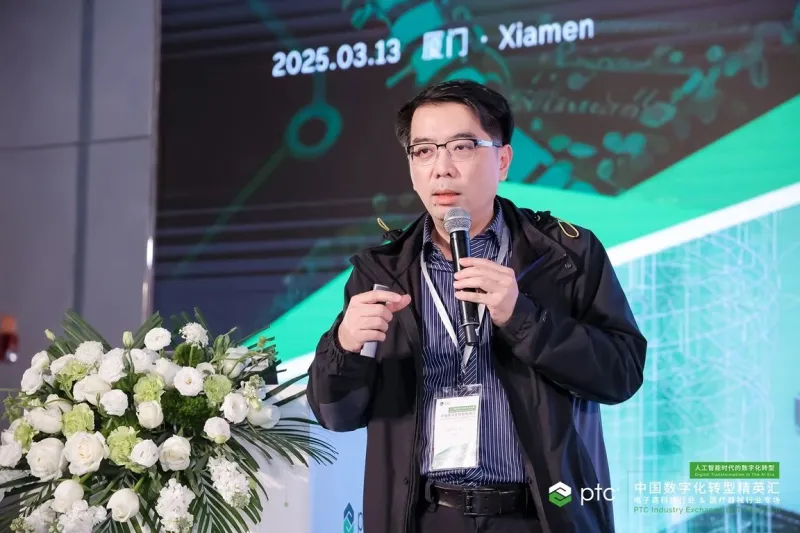
Mr. Liu Junjie, Business Expansion Manager at PTC Taiwan
Mr. Liu Junjie, Business Expansion Manager at PTC Taiwan, shared enterprise PLM cases from leading Taiwan ODM/EMS customers. PTC has a broad customer base in Taiwan's ODM/OEM/EMS industry with diverse products. This case covered multiple professional domains.
CAD drawing file management and drawing-material integration, through multi-server and dedicated UI integration, resolves Creo version differences across different customers; material and BOM management combines ODM Parts and EMS Parts to solve internal and manufacturer material and BOM management problems; process management and eSOP, built on Windchill, constructs structured processes and automatically generates related forms, improving efficiency and reducing errors; design library and electromechanical integrated development leverages Windchill to enable engineer collaboration, ensuring error-free structural and hardware design.
Taiwan EHT enterprises have many MBD application scenarios, such as structural model standardization; they are also exploring intelligent structural design, such as design checking and part reuse, which can help structural engineers improve design quality and efficiency.
Special Presentation
Enterprise PLM Boosts NPI Efficiency in Electronic Components Manufacturing
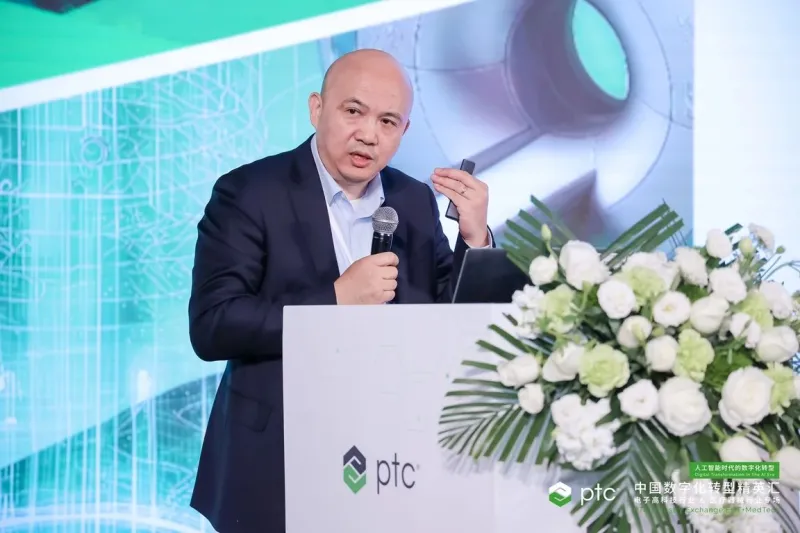
Mr. Li Tong, Business Solutions Manager at PTC
Mr. Li Tong, Business Solutions Manager at PTC, shared a case of enterprise PLM boosting NPI efficiency in electronic components manufacturing. The PCB manufacturing industry features complex processes, a high degree of customization, heavy automation and large order volumes, with high requirements for cross-regional collaboration and data security — raising enterprises' expectations for PLM.
The case offered reference recommendations covering engineering design process management and multi-discipline collaborative work management, emphasizing the ONE PLM concept — a single enterprise PLM solution carrying product development processes and data. The benefits of enterprise PLM are significant: synchronized R&D and process flows, closed-loop issue and change management, optimized security controls over data assets, improved material commonality, reduced material types and quantities, lower procurement costs, and fewer changes. Enterprise PLM can comprehensively boost NPI efficiency in electronic components manufacturing, improving competitiveness in a complex industry environment.
Medical Devices Industry Breakout Session
Special Presentation
Digitalization Trends in the Medical Device Industry
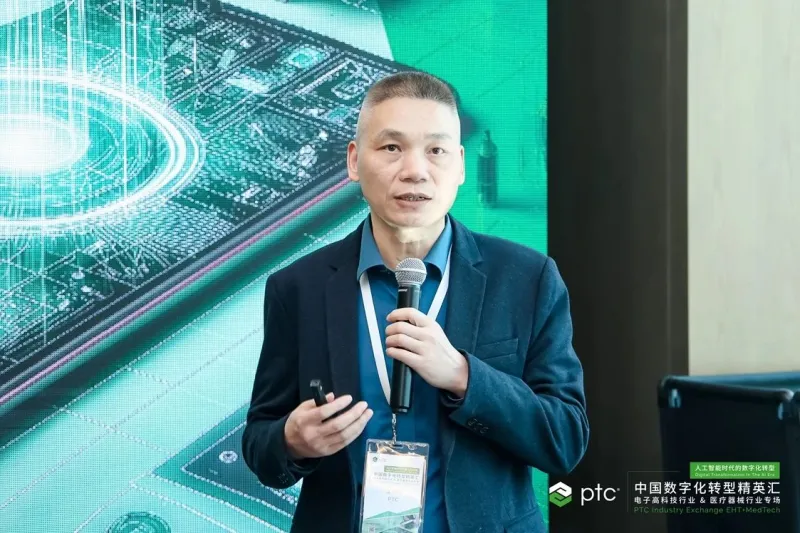
Mr. Shen Weiguo, Business Development Manager for Medical Devices at PTC
Mr. Shen Weiguo, Business Development Manager for Medical Devices at PTC, presented "Digitalization Trends in the Medical Device Industry," introducing how the medical device industry can achieve requirements-driven forward product design and service planning under quality compliance, and use configuration management to implement the ATO model oriented to customer and market needs, supporting end-to-end solutions from requirements to delivery.
He introduced medical device PLM digitalization trends from three main aspects:
Requirements-driven forward product development
End-to-end quality compliance meeting medical device industry requirements
Integrated planning from R&D to service
Finally, Mr. Shen summarized PTC's key capabilities supporting enterprise digital transformation in the medical device industry: ALM product lines supporting requirements-driven product development, and the PLM + QMS suite achieving a closed loop of end-to-end quality-compliant design.
Customer Case Sharing
A Quality Compliance-Oriented PLM Solution
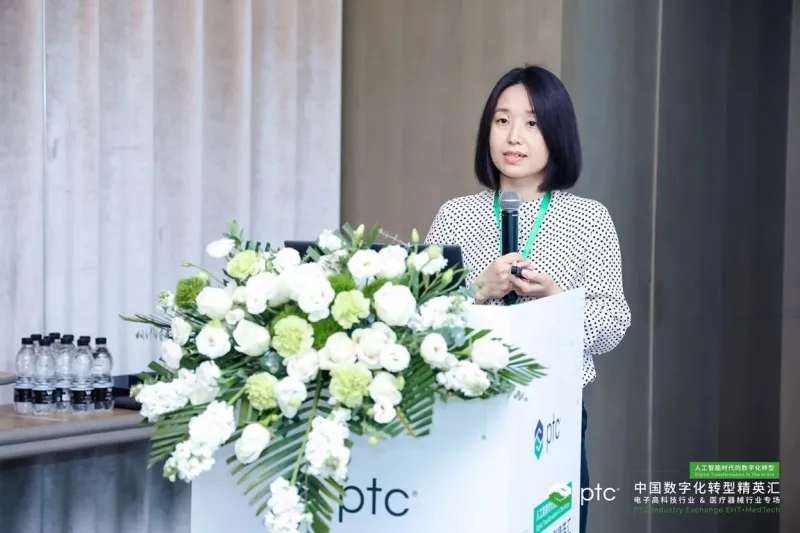
Ms. Lin Daoyun, Head of R&D IT at Mindray
Ms. Lin Daoyun, Head of R&D IT at Mindray, delivered a keynote titled "A Quality Compliance-Oriented PLM Solution." Mindray has long been a leading enterprise in China's medical device industry, using PTC solutions for many years to support integrated construction of product R&D, manufacturing and services.
Ms. Lin introduced the real-world deployment of Mindray's R&D + quality software suite solution based on Windchill and QMS, deeply analyzing the implementation path of quality-compliance-based R&D process management from the customer's perspective, specifically including:
Document control practices meeting industry regulatory requirements
Design control and risk management practices meeting industry regulatory requirements
Quality management practices meeting industry regulatory requirements
Mindray's presentation showed the valuable practices of medical device enterprises in digital transformation, as well as real cases of PTC software plus excellent practices empowering sustained growth of enterprise digital benefits.
Third-Party Perspective:
How Medical Device Enterprises Can Achieve Growth Through
Artificial Intelligence and Digitalization
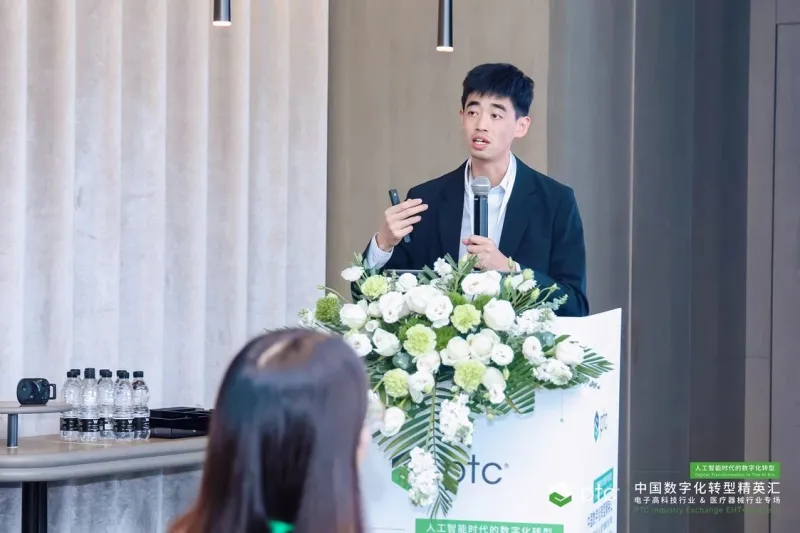
Mr. Ma Le, Engagement Manager at Boston Consulting Group
Mr. Ma Le, Engagement Manager at Boston Consulting Group, presented "How Medical Device Enterprises Can Achieve Growth Through AI and Digitalization." From a consulting firm's perspective, he provided a high-level overview of AI technology development trends and application scenarios in the medical device industry. His sharing analyzed in depth — across AI technology architecture, real cases and future outlook — the possibilities of AI empowering industrial transformation, showing the explorations of many enterprises at home and abroad in AI technology applications.
Mr. Ma shared a recent case of a medical device company using AI to strengthen customer segmentation: through machine learning, the company performed multidimensional scaling analysis of healthcare customers, evolving from traditional 2D market analysis to N-dimensional market analysis, identifying under-competed market segments, positioning key target markets and user profiles, achieving precise product value positioning and ensuring highly focused product development, thereby improving the product's overall market competitiveness.
Special Presentation
Asset-Centric Intelligent Field Service
— The ServiceMax Solution
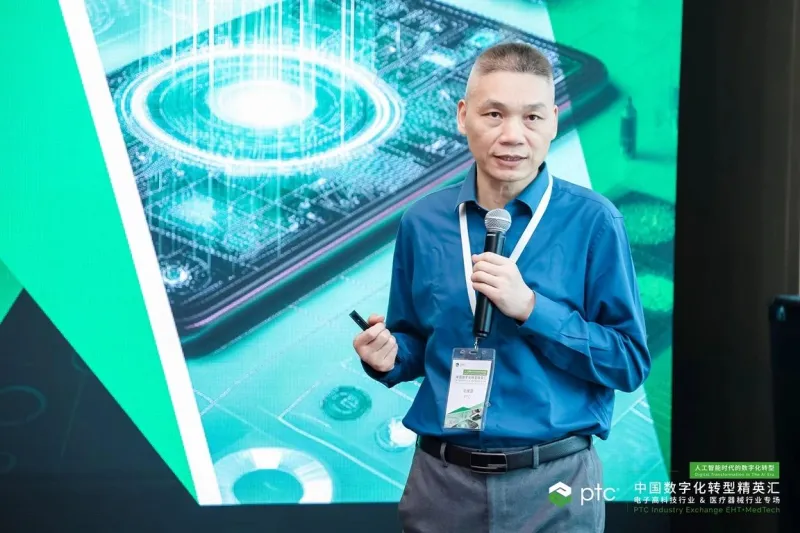
Mr. Shen Weiguo, Business Development Manager for Medical Devices at PTC
In "Asset-Centric Intelligent Field Service — The ServiceMax Solution," Mr. Shen Weiguo, Business Development Manager for Medical Devices at PTC, shared: PTC has long specialized in integrated product design/service solutions, and in recent years has integrated the ServiceMax field service management solution into its SLM full service lifecycle solution through acquisitions and development, achieving a complete solution from product design to service planning and field management.
ServiceMax helps medical device enterprises build an asset-centric service system, supporting field management through cloud and edge service process collaboration, specifically including:
AI-based automatic work order submission
Dispatching engineers with the right skills for on-site service based on work orders
Accelerating field service and spare parts access through mobile GPS and other features
On-site repair guidance including remote assistance
Mobile-supported work order closure
Special Presentation
Building a PLM-Based Digital Process System
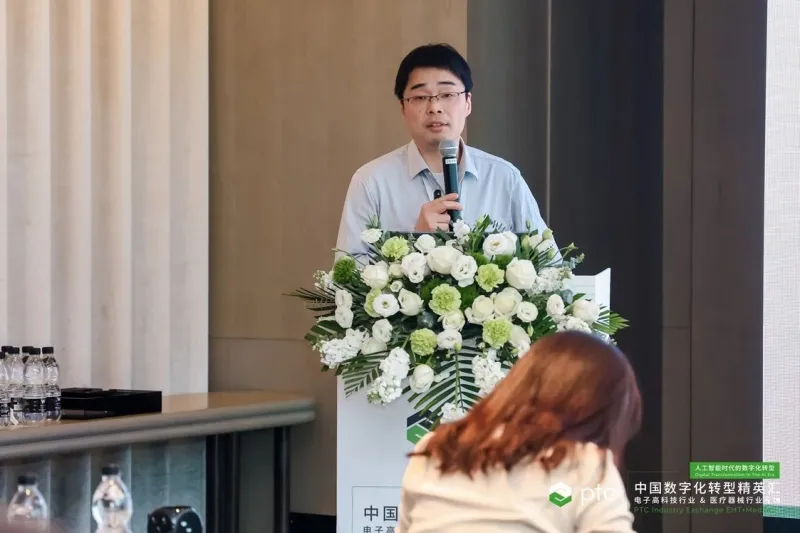
Mr. Qiu Shengliang, Senior Presales Consultant at PTC
Mr. Qiu Shengliang, Senior Presales Consultant at PTC, presented "Building a PLM-Based Digital Process System." Based on the latest R&D/manufacturing integrated management of a leading medical device enterprise, he introduced the BOP technology for building a full chain from R&D to manufacturing.
Process management is the link connecting product R&D to product manufacturing. Process design suffers from many iterations, frequent changes and errors. PTC's digital process system solution includes several key capabilities supporting collaboration:
Integrated design/process planning based on structured data
Automatic release of quality data such as SOP, SIP and FMEA from process to manufacturing
Release of interactive on-site operation guidance applications
Design/manufacturing data collection and analysis closed loop
Closed-loop change management from design to manufacturing
Finally, Mr. Qiu introduced a real case of a leading global medical device customer that rebuilt its digital design processes on the PLM platform, connecting the full process from product R&D to process planning and production manufacturing.
Customer Case Sharing
Efficient Creo Piping Design Applications in the Medical Industry
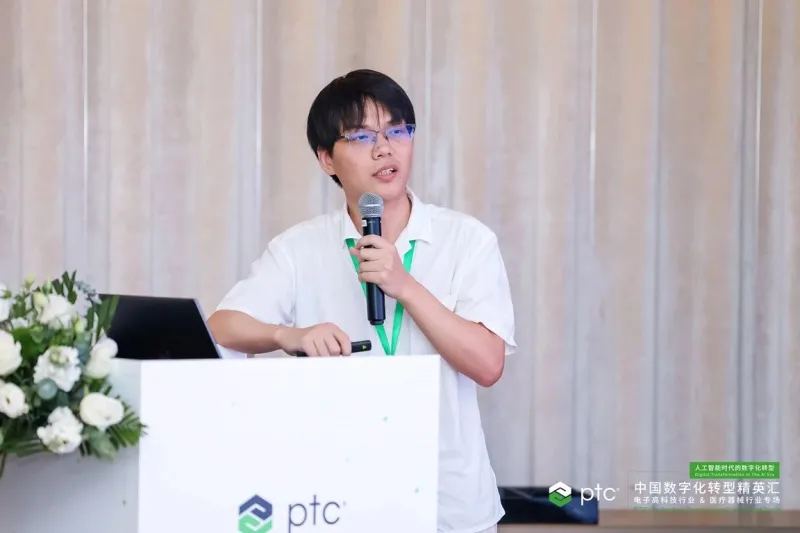
Mr. Zhuge Hang, Senior Engineer at Mindray
Mr. Zhuge Hang, Senior Engineer at Mindray, presented "Efficient Creo Piping Design Applications in the Medical Industry," introducing a practical case of automated wire harness design through the Creo product line in actual development work. Mindray uses PTC's Creo product line to achieve fully automated design from schematic design, 3D routing assembly validation, to 2D flattened harness development.
Harnesses in the medical device industry are increasingly complex, with ever-higher requirements for design quality and cost. The traditional approach requires first estimating harness length and then on-site trial fitting, which can easily result in harness lengths that fail quality requirements. In the medical device industry, equipment quality problems caused by poor harness and connector assembly have long been one of the major causes of equipment failures. Creo provides the following key capabilities to support efficient, high-quality harness design:
Importing schematic wiring diagrams into the Creo Cabling module to drive automatic 3D harness generation
Creo automatically calculates harness lengths and counts connector quantities and models
Creo automatically generates manufacturing-oriented harness nail board drawings
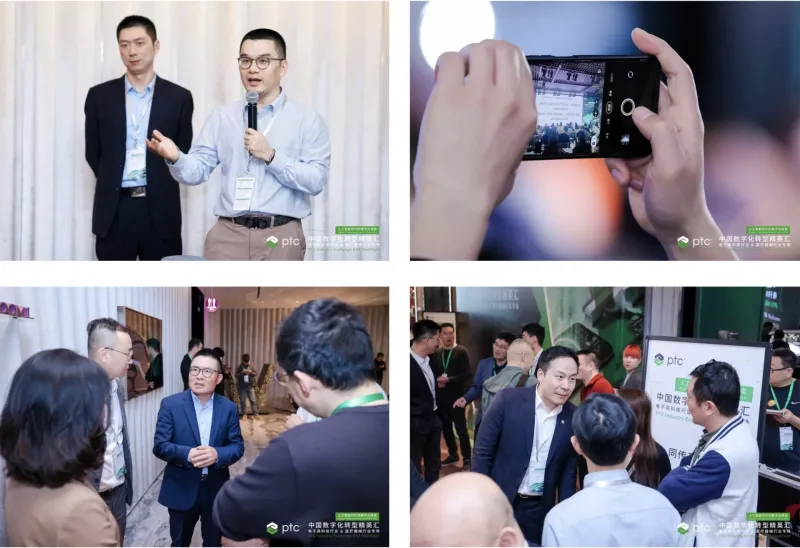
On-site exchange
The Xiamen edition of the China Digital Transformation Elite Summit was successfully held. Through this event, elites and enterprise representatives from the electronics and medical device industries gained a deep understanding of the latest trends in digital transformation in the AI era and the application of PTC's latest solutions through full exchanges. We look forward to the next stop of the "PTC Digital Transformation Elite Summit" bringing more customer experience sharing and technical content from different industries.